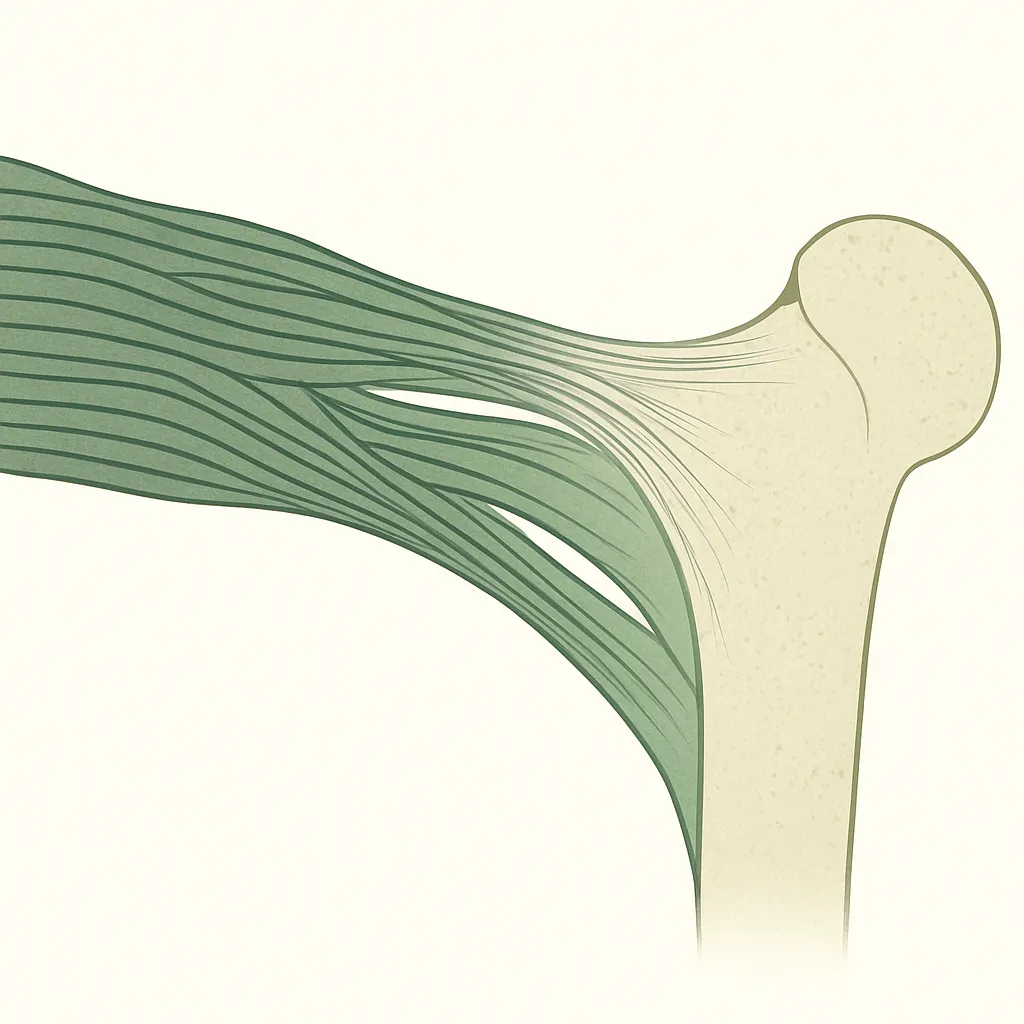
What collagen is made of
Collagen is not a single protein but a family of related structural proteins (over 28 types identified in humans, with types I, II, and III accounting for most of the body's collagen mass). What unites them is a distinctive triple-helix structure: three polypeptide chains wound tightly around one another to form a rope-like fibre of exceptional tensile strength.
The amino acid composition of collagen is unusual. Roughly one third of every collagen chain is glycine, the smallest amino acid; its compact size is what allows the three chains to pack tightly enough to form the helix. Proline and hydroxyproline together account for another substantial fraction, conferring rigidity and stability. This composition matters for nutrition because it means the demand for glycine during active collagen synthesis is high relative to a typical mixed diet.
Hydroxyproline deserves a special note: it is not an amino acid you eat directly in meaningful quantities. Your body makes it by hydroxylating proline after it has already been incorporated into the collagen chain, a step that requires vitamin C. This is the central biochemical link between the vitamin and the protein.
Vitamin C: the essential cofactor
The role of vitamin C (ascorbic acid) in collagen synthesis is well established and biochemically specific. Two enzymes (prolyl hydroxylase and lysyl hydroxylase) add hydroxyl groups to proline and lysine residues within nascent collagen chains. These modifications are essential: they allow the triple helix to form correctly and they create the cross-links between chains that give mature collagen its mechanical strength. Both enzymes require vitamin C as a cofactor to remain active.[3]
Ascorbic acid is a direct co-substrate of the prolyl and lysyl hydroxylases that drive collagen triple-helix stabilisation; without it, newly synthesised chains cannot be properly cross-linked.
The consequence of vitamin C deficiency is scurvy (a condition in which collagen synthesis fails systemically, causing connective tissue throughout the body to break down). Gums bleed, wounds fail to heal, blood vessel walls weaken. This clinical picture illustrates just how non-negotiable vitamin C is for normal collagen maintenance, not only for new synthesis.
In practical terms, adequate vitamin C intake is foundational, since collagen synthesis cannot proceed normally without it. For most adults, the Recommended Dietary Allowance is 75–90 mg per day (an amount easily met by eating citrus fruit, kiwi, strawberries, capsicum, or broccoli). Deficiency is uncommon in people eating varied diets, but those with very limited fruit and vegetable intake are at risk.
Evidence note
Glycine and amino-acid supply
Because glycine makes up roughly one third of the collagen molecule by residue, its supply can become a limiting factor during periods of high collagen turnover (injury recovery, intense training, or rapid growth). The body can synthesise glycine from serine, but the synthesis capacity may be insufficient to meet demand under high-load conditions. Some researchers have described glycine as "conditionally essential" in these contexts, though this remains an area of ongoing investigation.
Dietary sources of glycine are largely the same as sources of collagen itself: connective tissue-rich foods such as bone broth, skin, cartilage, and slow-cooked cuts. Gelatin (denatured collagen) is a concentrated glycine source, and this is partly why gelatin-based supplements have been studied as a way to boost collagen precursor availability around exercise.[1]
Proline, the other major collagen amino acid, is non-essential under most circumstances; the body can synthesise it from glutamate. Hydroxyproline does not need to be consumed at all; as noted above, it is made in situ from proline after chain assembly. So while the amino-acid pattern of collagen is unusual, dietary protein from a variety of sources (not exclusively connective tissue) provides the building blocks needed.
Protein and energy adequacy
Collagen synthesis, like all protein synthesis, requires both an adequate supply of amino acids and sufficient dietary energy. When overall caloric intake is low (as occurs during prolonged caloric restriction or illness), the body's protein economy shifts. Amino acids are increasingly directed toward energy production and essential metabolic functions rather than structural protein synthesis, including collagen.
Meeting general protein requirements therefore underpins everything else. For most healthy adults, this is in the range of 0.8–1.2 g of protein per kilogram of body weight per day from the general health standpoint, with athletes and people recovering from injury often advised to target the higher end of that range. Without this foundation, neither optimised amino-acid ratios nor vitamin C supplementation is likely to compensate.
Context note
Supplement or just good nutrition?
The most directly relevant human trials on collagen precursor nutrition involve timed supplementation: a small dose of vitamin C-enriched gelatin taken before exercise, to capitalise on the post-exercise window when collagen synthesis is elevated. Shaw et al. found that 15 g of gelatin plus vitamin C taken one hour before intermittent exercise doubled markers of collagen synthesis in blood compared to placebo.[1] Lis and Baar extended this work to examine different vitamin C-enriched collagen derivatives, confirming the importance of the vitamin C component.[2]
These are small mechanistic studies, and the translation to meaningful clinical outcomes (faster injury healing, greater tendon strength) has not been definitively established in large trials. The effect sizes are plausible, and the intervention is low risk, but it should be understood as a modest potential addition to a solid nutritional base, not a substitute for it.
For someone already eating adequate protein (including some animal-based sources or legumes), plenty of vegetables, and fruit, the marginal benefit of adding collagen supplements is uncertain. The case for supplementation is more plausible in someone with limited connective-tissue food sources, low fruit and vegetable intake, or an active injury requiring accelerated repair.
Fifteen grams of vitamin C-enriched gelatin consumed one hour before exercise doubled markers of collagen synthesis compared to a placebo control in a randomised crossover trial.
The bottom line
Your body's capacity to synthesise collagen depends on three things working together: an adequate supply of the right amino acids (principally glycine and proline from dietary protein), sufficient vitamin C to keep the hydroxylating enzymes active, and enough total energy and protein to prioritise structural synthesis rather than divert resources elsewhere.
None of these requirements demands an unusual or expensive diet. Regular protein intake from varied sources, consistent consumption of fruits and vegetables, and adequate overall food intake cover the fundamentals for most people. Targeted supplementation with vitamin C and gelatin or collagen peptides around exercise is a low-risk strategy with mechanistic support and early trial data behind it; the nutritional foundation matters first. See our evidence ratings for how this stacks up against other recovery interventions.
Medical disclaimer
This article is for educational purposes only and is not medical or dietetic advice. It does not establish a healthcare relationship. If you have concerns about your nutritional status, connective tissue health, or recovery from injury, consult a qualified clinician or registered dietitian.
References
- Shaw G, Lee-Barthel A, Ross ML, Wang B, Baar K. Vitamin C-enriched gelatin supplementation before intermittent activity augments collagen synthesis. American Journal of Clinical Nutrition. 2017. View on PubMed
- Lis DM, Baar K. Effects of Different Vitamin C-Enriched Collagen Derivatives on Collagen Synthesis. International Journal of Sport Nutrition and Exercise Metabolism. 2019. View on PubMed
- Ricol M, Lipinski O, Moali C, Sée V. Hypoxia and ascorbic acid: two interconnected microenvironmental factors driving collagen biosynthesis. Matrix Biology. 2026. View on PubMed