Why loading is the treatment
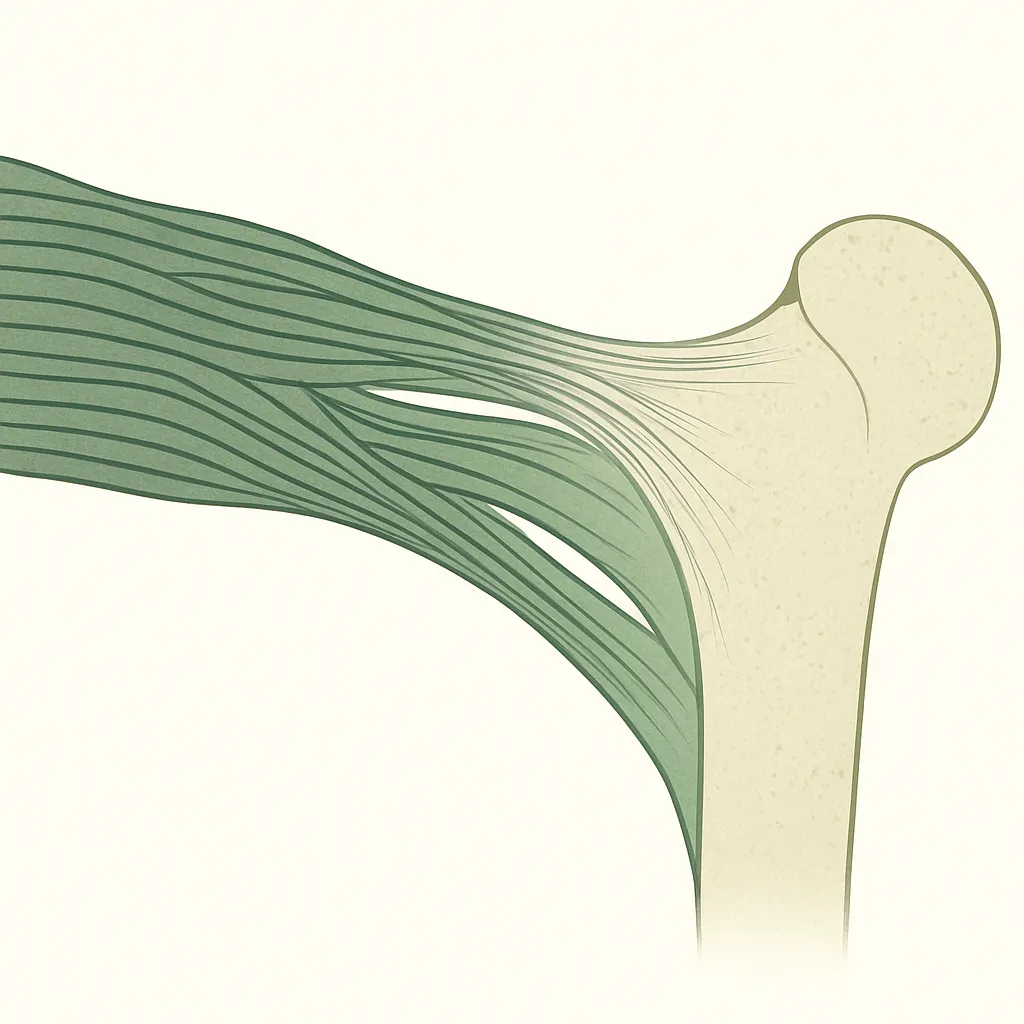
Tendinopathy is a problem of a tendon that has not adapted to the demands placed on it. Counterintuitively, the well-supported fix is to progressively load the tendon rather than rest it. Doing so stimulates the cells and matrix to remodel and build capacity. A systematic review of Achilles and patellar tendinopathy loading programs found consistently good clinical outcomes across protocols, and helped clarify why loading works.[3]
That reframing matters: the goal of rehab is not to avoid using the tendon, but to load it in a controlled, progressive way the tissue can respond to.
Eccentric training
The most studied protocol is eccentric training, popularised by Alfredson for chronic Achilles tendinopathy. In the original work, painful heavy-load eccentric calf raises performed twice daily produced marked improvements in pain and function in patients who had been candidates for surgery.[1] The protocol is demanding (high volume, often performed into some discomfort), which is both its strength and its main drawback.
Heavy-load eccentric calf training markedly reduced pain and restored function in patients with chronic Achilles tendinosis.
Heavy slow resistance
Heavy slow resistance (HSR) uses slow, heavy lifts through both the lowering and lifting phases, typically three sessions a week rather than twice daily. The appeal is practical: far fewer sessions and, for many people, a more tolerable experience, which translates into better adherence.
Head to head
A randomized controlled trial compared HSR directly with eccentric training for Achilles tendinopathy. At 12 weeks both groups improved significantly, with no meaningful difference in clinical outcomes; patient satisfaction and adherence favoured HSR, plausibly because it required a fraction of the weekly time commitment.[2]
Evidence note
How to choose
If you have minimal equipment and a tendon that tolerates it, the eccentric protocol is well proven. If time or adherence is the limiting factor, or you have access to weights, HSR delivers similar results with less daily burden. Either way, progress the load gradually, expect the process to take months rather than weeks, and use pain as a guide rather than a reason to stop entirely.
Safety note
The bottom line
For tendinopathy, the evidence points firmly at progressive loading, and both eccentric training and heavy slow resistance get you there. Pick the one you will actually do consistently; that single factor outweighs the differences between the protocols.
Medical disclaimer
This article is for educational purposes only and is not medical advice. It does not establish a doctor-patient relationship. Consult a qualified clinician or physiotherapist before beginning a rehabilitation program.
References
- Alfredson H, Pietilä T, Jonsson P, Lorentzon R. Heavy-load eccentric calf muscle training for the treatment of chronic Achilles tendinosis. American Journal of Sports Medicine. 1998. View on PubMed
- Beyer R, Kongsgaard M, Hougs Kjær B, et al. Heavy Slow Resistance Versus Eccentric Training as Treatment for Achilles Tendinopathy: A Randomized Controlled Trial. American Journal of Sports Medicine. 2015. View on PubMed
- Malliaras P, Barton CJ, Reeves ND, Langberg H. Achilles and patellar tendinopathy loading programmes: a systematic review comparing clinical outcomes and identifying potential mechanisms for effectiveness. Sports Medicine. 2013. View on PubMed